
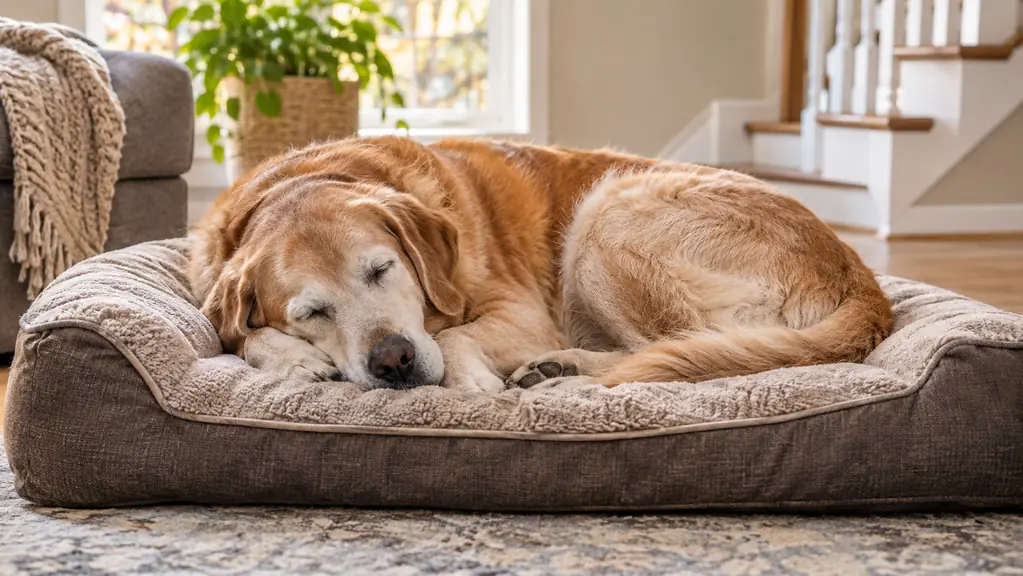
Biscuit started sleeping on the living room floor about two years ago. Not by choice. The bed he had owned since he was a puppy had stopped doing its job, and he would get up three or four times a night to circle and resettle, nails clicking on the hardwood at 2 a.m. I would lie there listening and know exactly what was happening down there.
Our vet diagnosed arthritis in both hips around then. The advice was the ordinary kind: keep his weight down, keep him moving, and give him a soft place to land. That last part turned out to be the hardest to get right. I bought and returned two beds before I brought home the Bedsure Orthopedic Dog Bed, and he has slept on it every night since.
I am not going to tell you a bed fixes arthritis. It does not. What this one did was make the twelve hours a day he spends lying down easier on him, and that turned out to matter more than I expected.
The Quick Verdict
A firm egg-crate foam base with bolsters on all four sides, which gives an old dog something to push against when he stands. The cover washes and the waterproofing is real. The foam softens under a heavy dog after a few months unless you rotate it, and that is the honest tradeoff.
Amazon Check Today's Price →The bed he gets up from now without the two tries it used to take
Biscuit is 72 pounds and 12 years old. The large measures 35 by 25 inches with a 7-inch profile, low enough that he steps on instead of climbs. Check today's price and current size availability on Amazon.
Amazon Check Today's Price on Amazon →How I've Used It
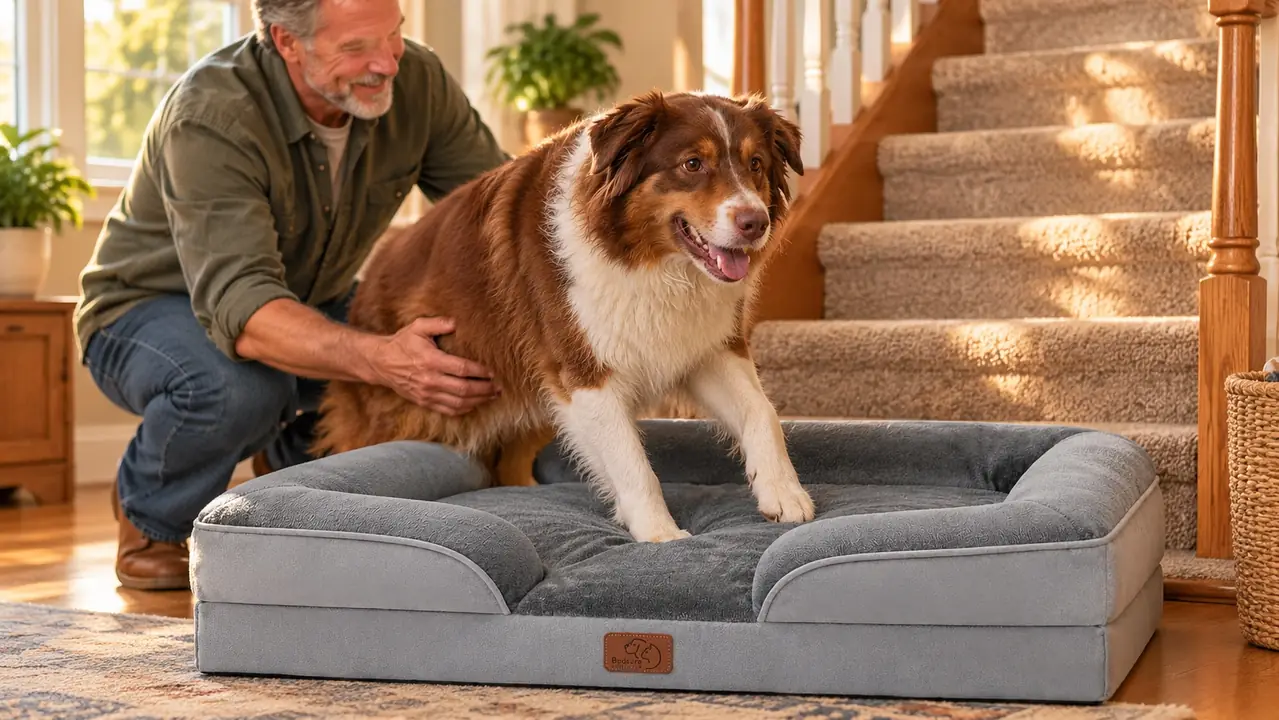
The bed sits on the living room carpet at the foot of the staircase, which is where he lands after coming down in the morning. Our house is two stories with a carpeted staircase, and by the time he reaches the bottom he is stiff enough that he wants to lie down within a minute or two. That one spot gets more use than anywhere else in the house, which is why I put the bed there instead of in a corner where it would look tidier.
For the first week I put it exactly where his old bed had been, mostly so he would not have to think about it. He walked a full circle around it, sniffed the bolster, and lay down facing the door. No drama, no suspicion. I have since moved it three times, once into the bedroom during a cold snap and twice out near the deck door in summer, and he has followed it each time without complaint.
I picked it partly for the 7-inch height. His old bed was thicker, and getting onto it had become a small project involving a front-paw lift and a shove. At 7 inches he steps on. That sounds like a small thing until you have watched a 12-year-old dog hesitate at the edge of something for a month and start sleeping on the floor instead.
At night it goes beside my side of the bed. He gets up once, usually around 3 a.m., turns around twice, and lies back down. That used to take him four separate attempts. Now it takes one or two, and I am usually asleep again before he finishes settling.
What the Four-Sided Bolster Actually Does
The bolsters run along all four sides, which makes this a sofa shape rather than a flat mat with a raised rim. For Biscuit the value is not the headrest. It is the brace. When he stands up he pushes his front paws against the front bolster and rocks backward to get his hind legs under him. On a flat bed he just scrambles, and there is a moment where he is not entirely sure it will work.
He also rests his chin on the rail when he is lying on his side. That keeps his head off the floor and seems to let him stay down longer. I have watched him hold that position for twenty minutes at a stretch. On the old bed his chin would slide off the edge, he would wake up, and we would start the whole settling process over again.
The bolster is firm enough to hold its shape when he leans his full weight on it and soft enough that he does not slide off the other side. It has not gone flat at the corners the way I expected it to. Several months in, the front rail still stands up on its own when I lift the bed by the opposite end to move it.
If your dog is a sprawler who lies flat with legs out in four directions, this shape will annoy him. The bolsters compress but they do not disappear, and the sleeping well in the middle is what is left after they take up their share of the space. Biscuit curls when he sleeps, so it suits him. A neighbor's lab mix sprawls, and she ended up with a flat mat instead.
The Foam, the Cover, and the Wash
The base is orthopedic egg-crate foam under a polyester cover. Egg-crate means a rippled surface with peaks and valleys, and that is what spreads a dog's weight instead of letting his hips press into one hard spot. It feels firm under my palm and gives slowly, the way a good mattress does. That firmness is the main reason I kept this bed and returned a softer one that let him sink until his elbows touched the floor.
The waterproofing is the part I tested by accident. Biscuit had a bad night in February, the kind that involves a towel and a lot of apologizing on my part. The cover came off, went into the machine on cold, and the foam underneath was dry. No soaking, no clumping, no smell left behind. The Bedsure listing makes a point of this and I can confirm it holds up in the one situation that matters.
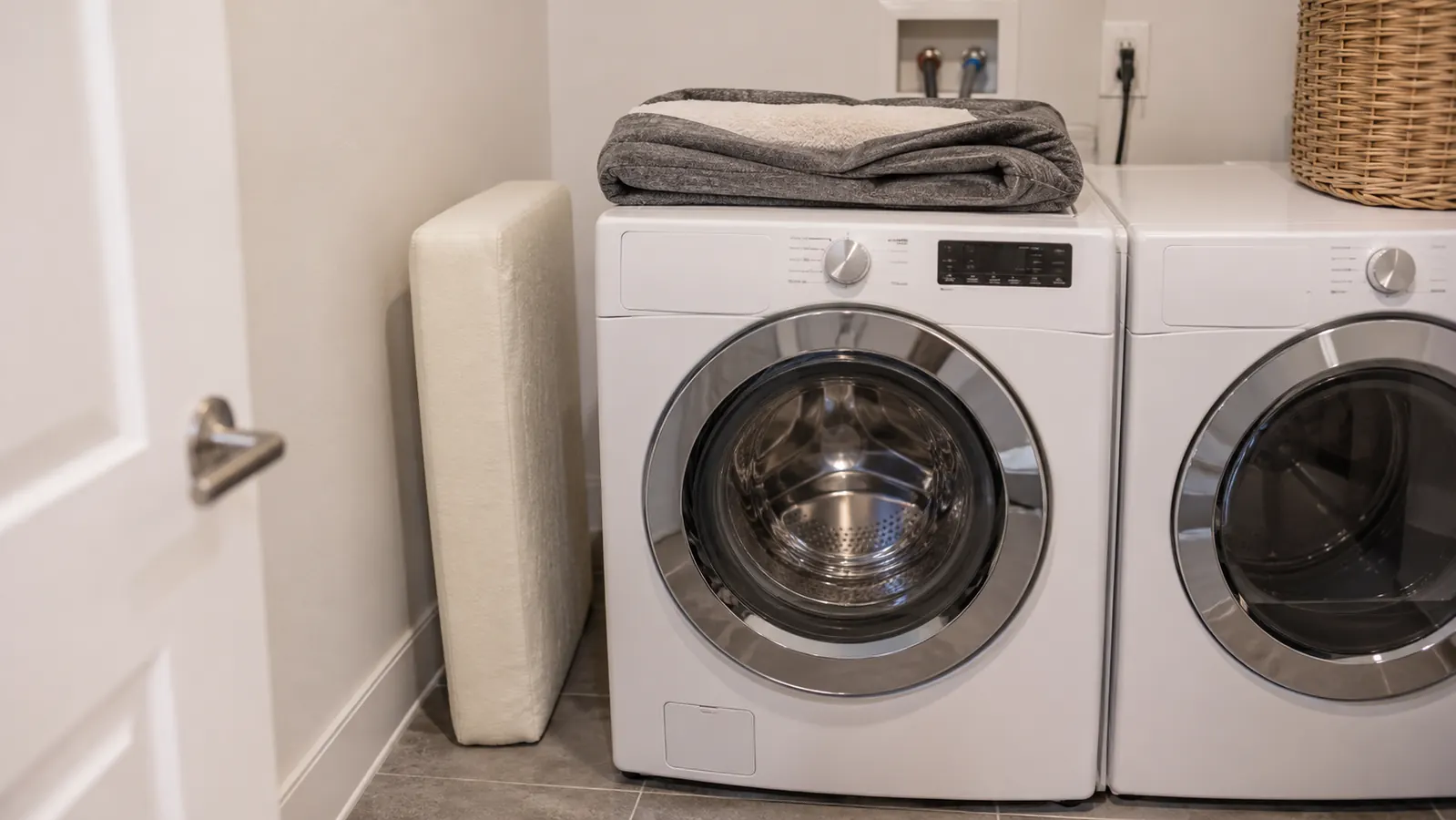
Washing is a two-step job, not a quick one. The cover comes off and goes into the machine, and then you are wrestling a 35 by 25 inch cover back over a foam insert while it is still slightly damp because you were impatient. Call it fifteen minutes of work, once a month or after a mess. I do it out on the back deck where there is room to fight with it without knocking anything over.
One caution worth saying plainly: this is foam, not a sealed cushion. A dog who chews bedding will get through the cover and into the egg-crate in an afternoon. That is true of every foam bed I have owned, and it is worth knowing before you spend anything on one.
How It Held Up Over the Months
Here is where I have to be straight with you. After several months of a 72-pound dog lying on the same end every night, the foam has softened in that one spot. Not flat. But noticeably less firm than the day it arrived, and I can feel the difference when I press my hand into it. I rotate the bed end to end every couple of weeks now, and I wish I had started doing that in month one instead of month four.
The bolsters have held their shape better than the base. The cover has pilled lightly on the top surface where his elbows rest, the kind of fuzz you get on a well-used fleece, and there is one small pull near a seam. Nothing has torn and nothing has separated. For a washable polyester cover that has been through the machine five or six times, that seems like fair wear.
January is when I noticed the biggest difference. Cold mornings are his worst time, and on the old bed he would come off it hunched and slow, back legs trailing for the first few steps across the carpet. On this one he still comes off stiff. He just straightens out faster, usually by the time he reaches the kitchen, instead of halfway through his walk.
If I had to put a number on it, I would guess the base has another year of nightly use at this rate with rotation, maybe less if your dog is heavier than Biscuit. The cover will outlast the foam by a wide margin. That is the honest math, and I would rather tell you at month six than have you find it out at month eighteen.
The 5.34 pounds matters more than I expected. It is light enough to carry up and down the stairs one-handed, which I have done more than once on a night when he would not come down on his own. A heavier bed with the same footprint would have stayed in one room and been useless on exactly the evenings I needed it upstairs.
Sizing, and the Mistake I Nearly Made
Sizing is where most people get this wrong, and I nearly did. Measure your dog from the base of the tail to the front of the nose while he is lying down, then add a couple of inches at each end. Biscuit measures about 40 inches that way and curls when he sleeps, so the 35 by 25 inch large works. A dog who stretches out flat needs the next size up, even if the dog weighs the same.
The Bedsure line runs nine sizes from 20 to 52 inches, which sounds like a lot until you realize how badly the word large gets used across this whole category. Ignore the label and buy the dimensions. If you are between sizes and your dog sprawls, go up. There is no version of this where a too-small bed gets better with time.
I also looked at the Kopeks orthopedic bed before I ordered, mostly because it turns up in every search for this. It is a different shape, with a flatter profile. I went with this one because the four-sided bolster gave Biscuit something to push against when he stands, and because I wanted a cover I could machine wash without a fight. If a thicker foam base matters more to you than the bolster does, that one is worth a look.
What I Liked
- Bolsters on all four sides give an older dog something to push against when standing up
- Orthopedic egg-crate foam stays firm enough to spread weight instead of letting a dog sink to the floor
- Removable washable cover, and the waterproof layer kept the foam dry through a genuine accident
- 7-inch profile means stepping on rather than climbing
- Light enough at 5.34 pounds to carry between rooms one-handed
Where It Falls Short
- Egg-crate foam softens under a heavy dog within a few months unless you rotate the bed
- Cover pilled lightly and picked up one small pull at a seam
- Getting the cover back on after washing is a genuine wrestle
- Wrong shape for a dog that sprawls flat with legs out
The change was not dramatic. It was that I stopped hearing his nails on the hardwood at 2 a.m.
Who This Is For
This is for the owner of an older dog who has started hesitating at the edge of his bed, or who circles four times before lying down, or who gets up stiff in the morning and needs a few steps to loosen out. It suits dogs who curl when they sleep and dogs in that broad middle range who need a firm base rather than a deep sink to lie in. It is also for anyone who has thrown out a perfectly good bed because it could not be washed.
Before you change anything about how your dog sleeps, though, have the conversation with your vet. That is not a disclaimer I am tacking on the end. Biscuit's hip arthritis was diagnosed about two years ago, his weight and his medication are managed separately, and the bed is a comfort measure that sits on top of that plan. Stiffness that is new, or getting worse, deserves a look rather than a new purchase.
Who Should Skip It
Skip it if your dog sprawls flat with his legs out, if he chews bedding, or if he needs a bed so thick that he steps down into it rather than onto it. Skip it if you want a cover that goes back on easily, because this one does not. And skip it if you are hoping a bed will stand in for the plan your vet gave you around weight, movement, and pain. Biscuit still takes his short evening walk around the block. The bed makes the hours between walks better, and that is the whole of the claim.
If your dog hesitates at the edge of his bed, start with the measurement, then the bed
Measure nose to tail base while he is lying down, add a couple of inches at each end, and pick the size from the dimensions rather than the label. Nine sizes run from 20 to 52 inches. Check today's price on Amazon.
Amazon See Today's Price on Amazon →