
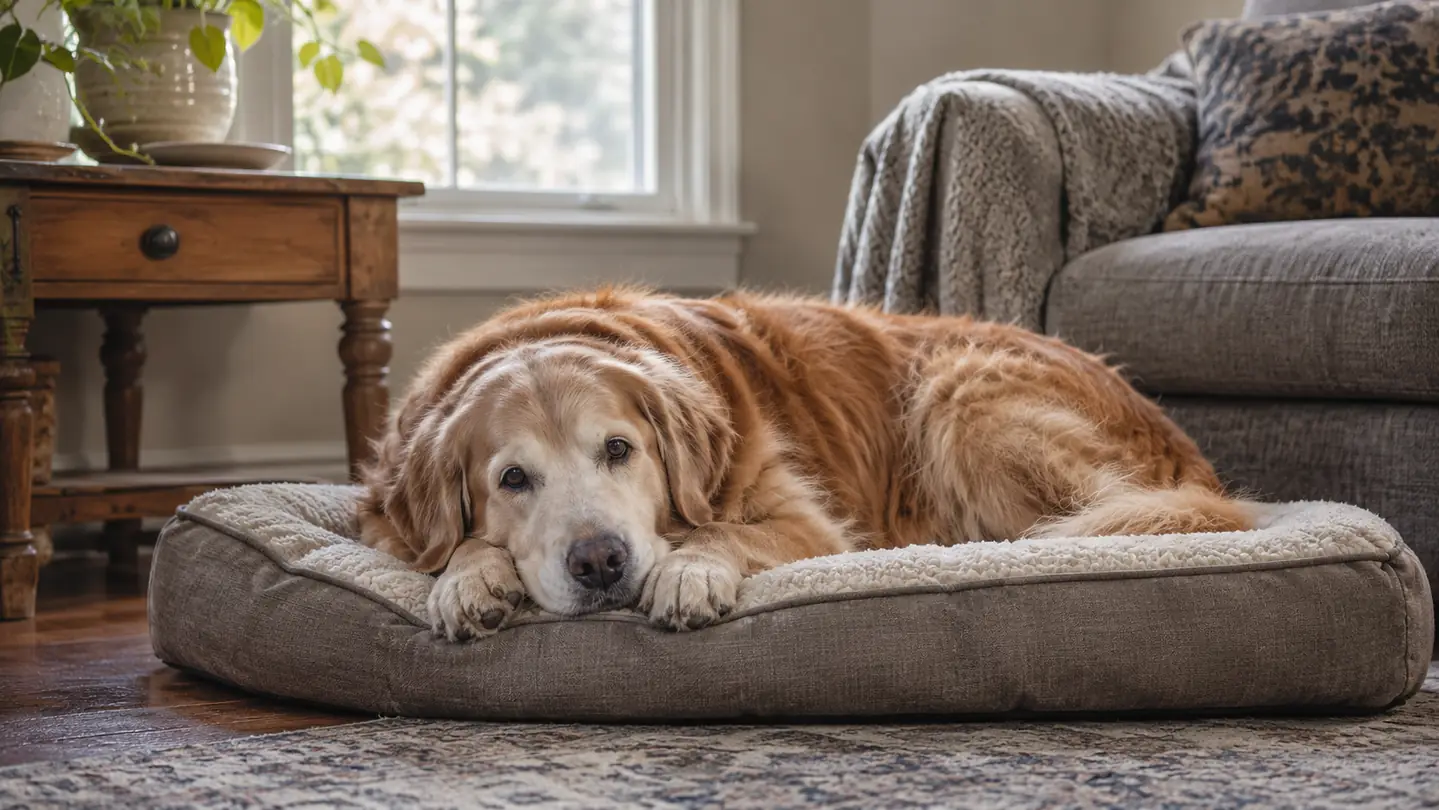
For two years I watched Biscuit circle his old bed like it was a job he no longer wanted. He would lower his back end, stop halfway down, stand back up, and try again three inches to the left. Some nights he quit and slept on the carpet beside it instead. He is a 12-year-old Golden Retriever, about 72 pounds, and our vet diagnosed arthritis in both hips about two years ago. The stiffness is worst on cold mornings and right after a long nap, which meant the sleep itself was feeding the problem.
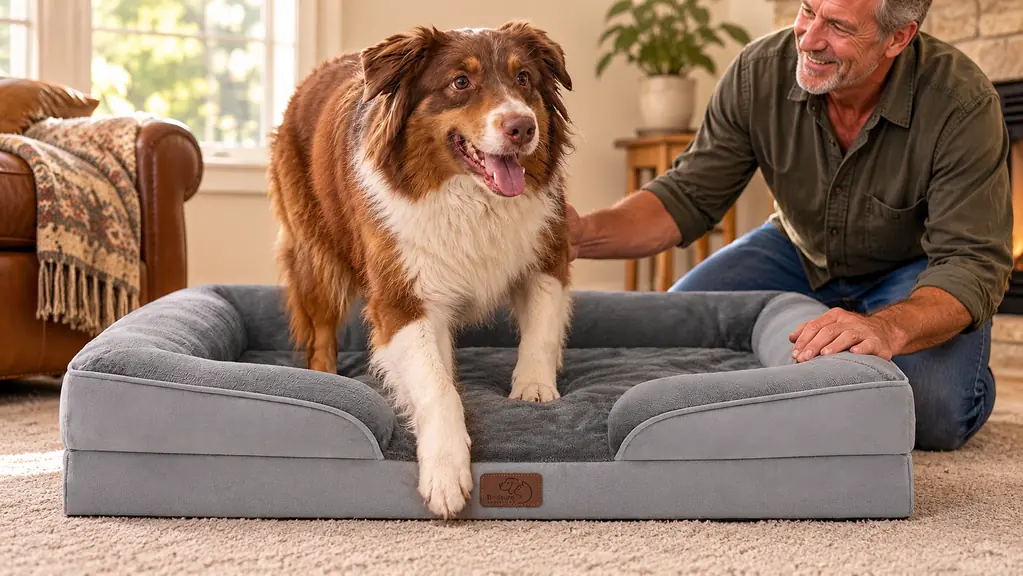
What changed his nights was smaller than I expected. We swapped the flat bed for a Bedsure orthopedic dog bed, the large rectangular one at 35 by 7 by 25 inches, and then spent a week fixing everything around it: where it sat, how he got onto it, and how often I washed the cover. Bedsure did not cure anything. Biscuit still has arthritis in both hips and he still has bad mornings in January. But he sleeps through until about 5:30 now, and he gets up without that first wobble in his back legs. Here is the order I would do it in if I were starting over.
The bed that ended the circling
Bedsure's orthopedic bed has a four-sided bolster and an egg-crate foam base, and the cover comes off for the wash. It is the piece I would buy first and fuss over least.
Amazon Check Today's Price on Amazon →Step 1: Put the bed on the floor he actually sleeps on, not the one that looks nice
We have a two-story house with a carpeted staircase, and for years Biscuit slept upstairs at the foot of our bed. When the stairs got hard, I kept carrying him up at night, which was fine for me and miserable for him. A dog with hip arthritis does not want to be lifted twice a day. The single best change we made was moving his sleeping spot to the living room, on the same floor as the back door and the water bowl, and letting that be his place instead of a compromise.
Pick the room where he already lies down during the day. Not the room you think a dog bed belongs in. Biscuit had been napping on the same patch of carpet near the radiator for months, and that is exactly where the new bed went. He used it the first night without being coaxed, which told me more than any product description could. That was the first week of November, the week the overnight temperature dropped into the low thirties. I measured the wall between the radiator and the bookshelf with a tape measure and got 38 inches, which is why I went with the 35-inch bed instead of the next size up. It fit with the bolster clear of the wall and I did not move a single piece of furniture to make it work.
Then keep him off the stairs after dark. We put a baby gate at the bottom, not because he tries to climb but because he forgets himself when he is tired and half-asleep. One stumble on a carpeted step at 2 a.m. can undo a month of good rest, and it is a lot easier to block the staircase than to rehab a strained leg.
Step 2: Size the bed to his weight and to how he lies down
Bedsure makes nine sizes from 20 to 52 inches, and the large at 35 by 7 by 25 inches is what suits a 72-pound dog who sprawls. If your dog curls tight, you can size down. If he stretches out flat with his back legs behind him, which is what Biscuit does when his hips are sore, go up. The bed should let him lie flat without his feet hanging over the edge, because a hanging foot pulls the spine out of line and he will wake up stiff from that alone. I measured him on a Sunday afternoon while he was asleep and stretched out on the kitchen floor: 44 inches from nose to tail and 22 inches across the shoulders. That is how I landed on the large instead of guessing from his weight. Weight tells you how much foam you need. Footprint tells you how much bed.
The base is orthopedic egg-crate foam, polyester and polyurethane, about 5.34 pounds for the whole bed. It is not memory foam and it will compress over months, so rotate it and flip it when you wash the cover. What it does well is spread weight. Biscuit's elbows and hips are the pressure points, and on the flat bed he was shifting every twenty minutes. On the egg-crate base he settles and stays settled, which is the difference between six hours of broken sleep and six hours of real sleep.
The four-sided bolster matters more than I thought it would. Bedsure built the sofa-style shape around neck support, and for an older dog that means he can rest his chin on the raised edge instead of holding his head up. If your dog has neck arthritis alongside the hips, watch how he lies in the first week. If he never touches the bolster, a flatter bed may suit him better and you should not force it.
Step 3: Fix the approach, not just the bed
This is the step people skip. A good bed with a bad approach is a bed your dog stops using. The bolster on the Bedsure runs all four sides, so there is a low wall to step over. Biscuit managed it fine, but the first two nights he stood and looked at it. I folded a thin towel over the front edge to soften the step and he walked right in. The first night I sat on the floor beside it with my hand on his shoulder, which I am not proud of, but it worked. By the third night he was going in on his own around 8:45, a full hour before I went to bed, and I would find him already asleep when I came back through the living room. After a week I took the towel away and he never hesitated again.
Watch the flooring too. The bed sat on carpet for us, which grips. If yours goes on hardwood or tile, put a rubber mat or a throw rug underneath so the whole thing does not slide when a stiff dog pushes off it. A sliding bed teaches a dog not to trust the bed, and you will find him back on the floor within a week.
Our back deck has three wooden steps down to the yard, and those were the other half of the problem. Biscuit could get down them in the evening but not back up after his walk, so I started letting him in through the front door instead, which is level. Small detours like that sound ridiculous until you realize you are removing the thing he is dreading, and a dog who is not dreading something sleeps better at night.
Six weeks in, he walked to the bed, stepped over the bolster without stopping, and was asleep before I turned off the lamp. That was the whole change.
Step 4: Wash the cover on a schedule, not when it smells
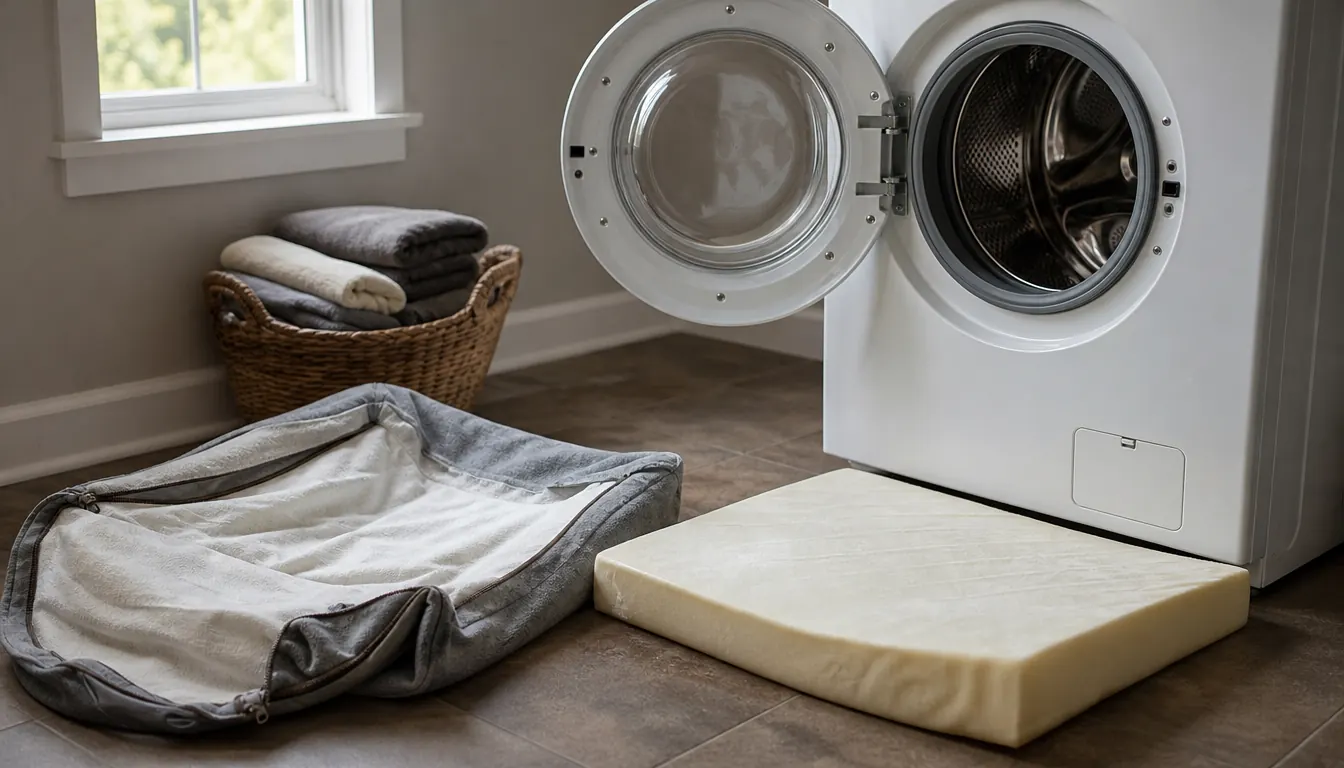
Older dogs have accidents. There is no gentle way to say it, and a bed that gets soaked and stays soaked is a bed your dog will avoid. The Bedsure cover is removable and listed as waterproof, and the whole point of buying a washable bed is that you actually wash it. I do the cover every two weeks whether it needs it or not, and immediately after any accident.
The cover comes off, the foam insert does not go in the machine. Ever. Spot clean the foam with a damp cloth and let it air dry flat, away from direct heat, because a foam base that goes through a dryer comes out lumpy and never recovers its shape. I run the cover on cold and gentle with a small amount of detergent and nothing else in the drum, then hang it over the back of a kitchen chair. It is dry by morning in July and not until afternoon in January, so I try to wash it on a Saturday. Having a second cover would save you a night of losing the bed entirely, and it is the one extra I would buy.
One honest note. The stitching on the bolster seam is where these beds wear first, not the base. Check that seam when you strip the cover, and if it starts to open, mend it before the foam is exposed. Mine has held up fine, but I am one household and there are 36,000 reviews on this bed saying a lot of different things.
Step 5: Build a fifteen-minute wind-down before lights out
The bed cannot do all the work. Biscuit is stiffest after a long nap, so putting him down for the night straight out of an evening snooze is asking for a restless start. Fifteen minutes before bed, I get him up and moving. Not a walk, just a slow wander to the kitchen and back, enough to loosen the hips before he lies down again.
Then a short, flat walk around the block, which he still loves and which our vet encouraged us to keep doing as long as he is willing. Our loop is about four tenths of a mile, which I checked once out of curiosity, and it takes us fourteen minutes now. It took nine minutes a year ago. I do not try to make up the difference. Warm muscles at bedtime mean less midnight shifting. In winter I dry his paws and his belly with a towel before he goes to the bed, because a damp dog on foam is a cold dog by morning, and cold is what makes arthritic joints stiffen.
And talk to your vet about timing. Ours adjusted when Biscuit gets his medication so that it lines up with the hours he is most uncomfortable, which for him is overnight. That is a conversation to have with your vet and not something to work out from a blog post. I do not give dosing advice and I would not take it from anyone who has not examined my dog.
What Else Helps
Weight is the lever most owners can actually pull. Every extra pound on a dog with hip arthritis is load on a joint that is already inflamed, and our vet was blunt about it. We cut Biscuit's portions by about a quarter cup a day and swapped some of his kibble for green beans, and he dropped a few pounds over four months. He moved better for that than he did for anything I bought.
After that, it is a series of small friction removals. A ramp or a set of folding steps for the back of the silver Honda CR-V, because he can no longer jump in on his own and lifting 72 pounds of unhappy Golden into a car is bad for both of you. Raised food and water bowls so he is not reaching down with a sore neck. Throw rugs on the hardwood path from the living room to the kitchen. None of it is glamorous and none of it is expensive, and together it is the difference between a dog who moves carefully and a dog who stops moving.
If your dog is still restless after all of this, that is a vet conversation, not a shopping problem. Pain that is not controlled will beat any bed. Ask about a recheck of the joints, ask whether the current plan is still working, and ask what signs would tell you it is time to change it.
Start with the floor he is already sleeping on
Bedsure's orthopedic bed comes in nine sizes from 20 to 52 inches, with a removable waterproof cover you can wash every two weeks. Measure your dog stretched out flat before you order.
Amazon See Sizes and Today's Price on Amazon →