
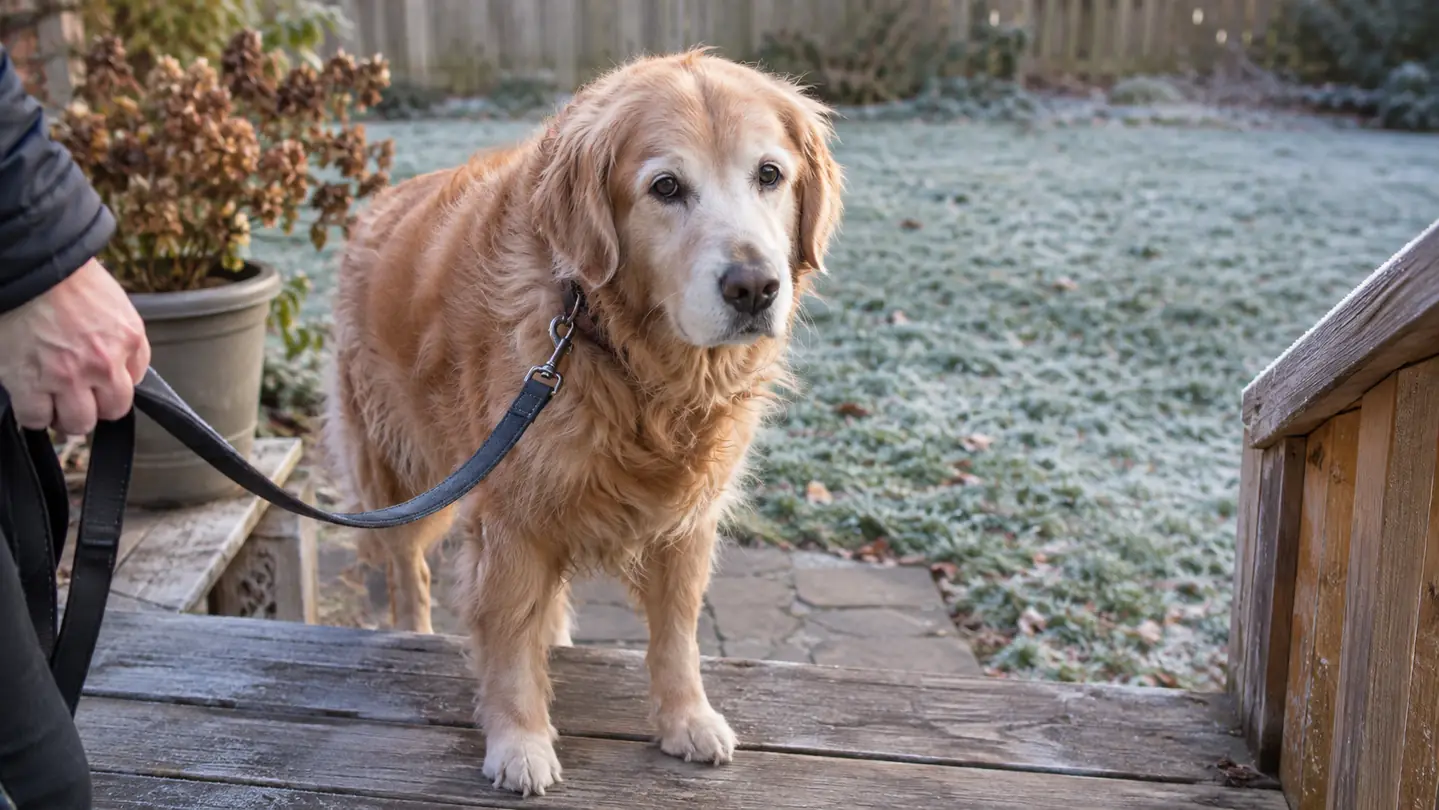
Three steps. That is all that separates our back deck from the yard, and for eight years Biscuit went down them at a trot without thinking about it. Last November I stood at the top with a leash in one hand and a coffee going cold in the other, watching him decide. Front paws on the first board. Back legs still up on the deck. Then he turned his head and looked at me, and I knew we were done pretending.
He is a twelve-year-old Golden Retriever, about seventy-two pounds. Our vet found arthritis in both hips roughly two years ago, and his back legs have been the part he trusts least ever since. Cold mornings are the worst. So is the first five minutes after a long nap. What finally got us moving again was a rear support sling, the LOOBANI adjustable dog sling, recommended by a neighbor who shows dogs and used one on her own old shepherd.
Before that, we tried everything people suggest. A towel under the belly, which worked for one trip and then bunched and slid and left my hands smelling like wet laundry. A ramp off the deck, which Biscuit refused to look at, let alone walk on. His regular harness, which is fine for a walk but gives you nothing to hold when the trouble is behind him rather than in front. Mostly I lifted him. Seventy-two pounds of willing dog is still seventy-two pounds, and my lower back filed a complaint.
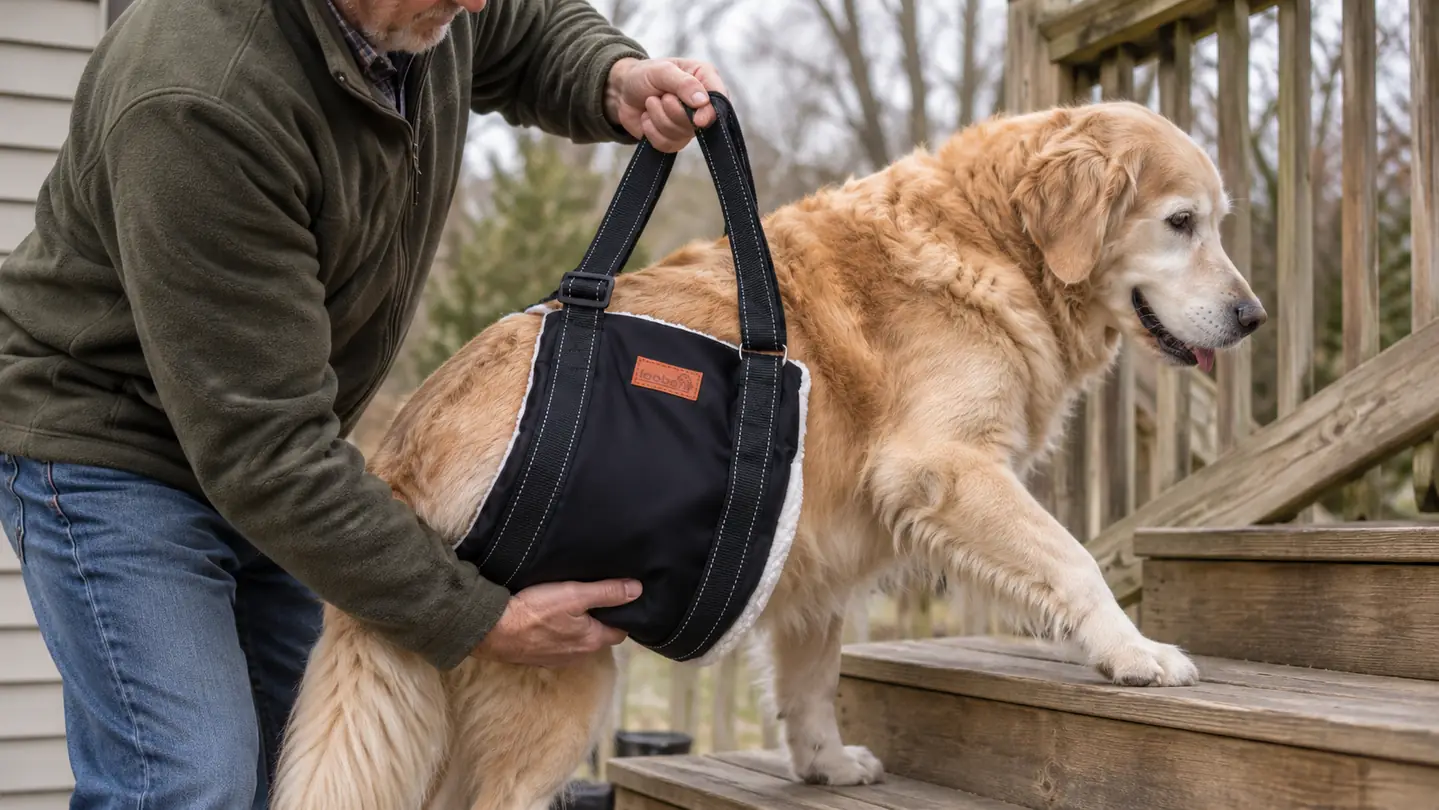
The sling arrived on a Tuesday, folded flat inside its own storage bag. My first thought was that I had ordered the wrong thing, because it looked too simple to do anything. It is a band of nylon, thick through the middle and soft along the lining, with a drawstring along the top edge to set the fit. You stand beside your dog, gather the top edge in one hand, and take part of his weight. That is the whole method. No straps over the shoulders, nothing to clip or buckle, nothing to readjust halfway across the yard.
The first trip down took four seconds. He did the walking. I did the steadying. After two years of lifting him myself, I had to stop on the second step and get my face together.
Stop being the crane
The LOOBANI sling puts your hand under the hindquarters instead of under the whole dog. Nylon, sheepskin-like lining, machine washable, folds into its own storage bag.
Amazon Check Today's Price on Amazon →Four seconds, maybe five. He pushed off with his back legs, I caught the wobble, and we were in the yard. Down three steps, around the maple, back up again. He did the walking. I did the steadying. That surprised me more than the steps did. By the end of that week he was waiting at the top of the deck in the morning instead of standing at the door hoping I would skip it.
The details have held up better than I expected. The lining is a sheepskin-like material, which matters more than it sounds, because a bare strap under a dog's belly will rub a sore spot in a week. The nylon wipes clean and the whole thing goes in the washing machine. It weighs about seven ounces, so it rides in the car door pocket without me noticing it is there. After each use I fold it and drop it back in the storage bag, which now hangs by the back door next to the leash.
Here is what it will not do. It will not make him stronger and it will not fix the arthritis. On a bad morning I still carry more of him than on a good one. It is not hands-free either, so if your dog lunges at squirrels you will want a short leash and one calm hand. And the fit matters. Set it too far forward and it turns into a chest strap that does nothing useful. It took me three tries to find the right spot, and I marked it with a piece of tape so I stop guessing.
The car is where it earned its keep second. Biscuit cannot jump into the back of the CR-V anymore, and that used to be a two-person job with one of us lifting and one of us steadying the door. I do not always have a second person. Now I set the sling, he puts his front paws on the bumper, and I take his hind end while he pushes himself up. Getting out is the harder direction of the two, and the sling helps more there than it does going in.
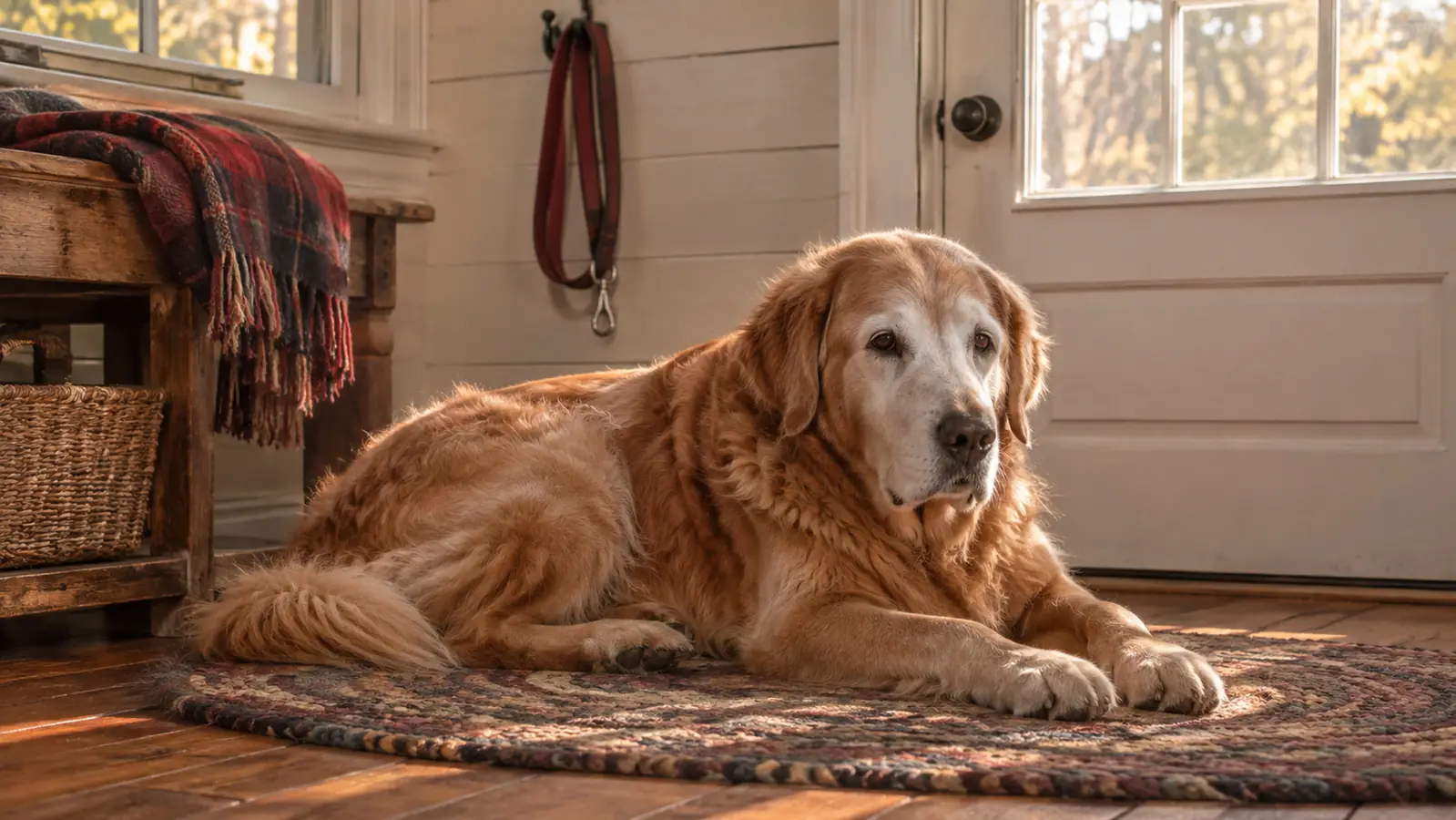
We do not do the inside stairs anymore. The carpeted staircase to the second floor became his favorite place to stop and think, and one of us was going to get hurt on it eventually. That decision was made before the sling and the sling did not change it. He lives on the ground floor now, with a rug at the bottom of the steps so he is not landing on bare floor when he comes in from the yard.
What I'd Tell You If We Were Sitting at My Kitchen Table
First, call your vet before you buy anything. Hind end weakness in an older dog can come from several places, and what helps depends on which one you are dealing with. Ours confirmed the hip arthritis and gave us a plan: shorter evening walks, a rug at the bottom of the stairs, and something to support his back end on steps and in the car. The sling is one line in that plan. It is not the plan.
Second, stop making lifting your default. I did it for months because it was faster, and because I did not want to admit out loud how much it cost him to be hoisted off his own deck. The LOOBANI sling changed the shape of the day. He takes the three steps without the long pause at the top. He gets in the car without being carried. He is still an old dog with sore hips and he still has bad mornings. But he has his yard back, and I have my back.
Three wooden steps should not be the end of the yard
If your dog has started pausing at the top of the stairs, the LOOBANI sling is the simplest thing I know that helps. Check the sizing against your dog, and ask your vet before you change his routine.
Amazon See the LOOBANI Sling on Amazon →